The Transformative Power of AI-Driven Candidate Assessments in Hiring
June 25, 2026

AI-driven candidate assessments are reshaping modern recruitment by enabling organizations to evaluate candidates faster, more consistently, and at scale. Leveraging Artificial Intelligence, Machine Learning, and predictive analytics, these tools automate resume screening, candidate ranking, skills assessments, and interview evaluations while improving hiring efficiency and reducing recruitment costs. AI-powered recruitment solutions also support diversity initiatives by minimizing unconscious bias and enhancing candidate matching. However, organizations must address challenges such as algorithmic bias, transparency concerns, over-reliance on automation, and limitations in evaluating soft skills. Successful adoption requires human oversight, regular audits, clear objectives, and a commitment to ethical and transparent hiring practices.
Introduction Why AI-Driven Candidate Assessments Matter Now

In today’s highly competitive hiring environment, organizations face increasing challenges in managing large volumes of applications while ensuring a fair, efficient, and data-driven recruitment process. This is where AI-driven candidate assessments are transforming modern talent acquisition. By leveraging Artificial Intelligence (AI) and advanced algorithms, businesses can automate candidate evaluations, streamline recruitment workflows, and improve hiring accuracy. Modern AI-powered recruitment solutions help reduce manual screening efforts, accelerate decision-making, and identify the most qualified candidates based on skills, experience, and job fit. Studies show that implementing AI in recruitment can significantly lower recruitment costs, reduce time-to-hire, and support workforce diversity by minimizing unconscious bias in the hiring process. As a result, AI candidate assessment tools are becoming essential for organizations seeking to enhance hiring efficiency, improve candidate quality, and build stronger, more diverse teams.
The Evolution of Hiring From Manual to AI-Powered Assessments

Historically, recruitment processes depended heavily on manual reviews and human judgment, often resulting in inefficiencies, inconsistent evaluations, and the potential for unconscious bias. The introduction of Applicant Tracking Systems (ATS) marked the beginning of recruitment automation by helping organizations manage applications more efficiently. Today, advancements in AI-driven candidate assessments and AI-powered recruitment tools have taken hiring technology to a new level. Modern Artificial Intelligence (AI) solutions can analyze resumes, evaluate candidate qualifications, assess video interviews, and process large volumes of applicant data with remarkable speed and accuracy. This evolution has transformed traditional hiring into a more objective, scalable, and data-driven recruitment process, enabling organizations to improve candidate screening, accelerate hiring decisions, and enhance the overall quality of talent acquisition outcomes.
The Advantages of Incorporating AI in Recruitment
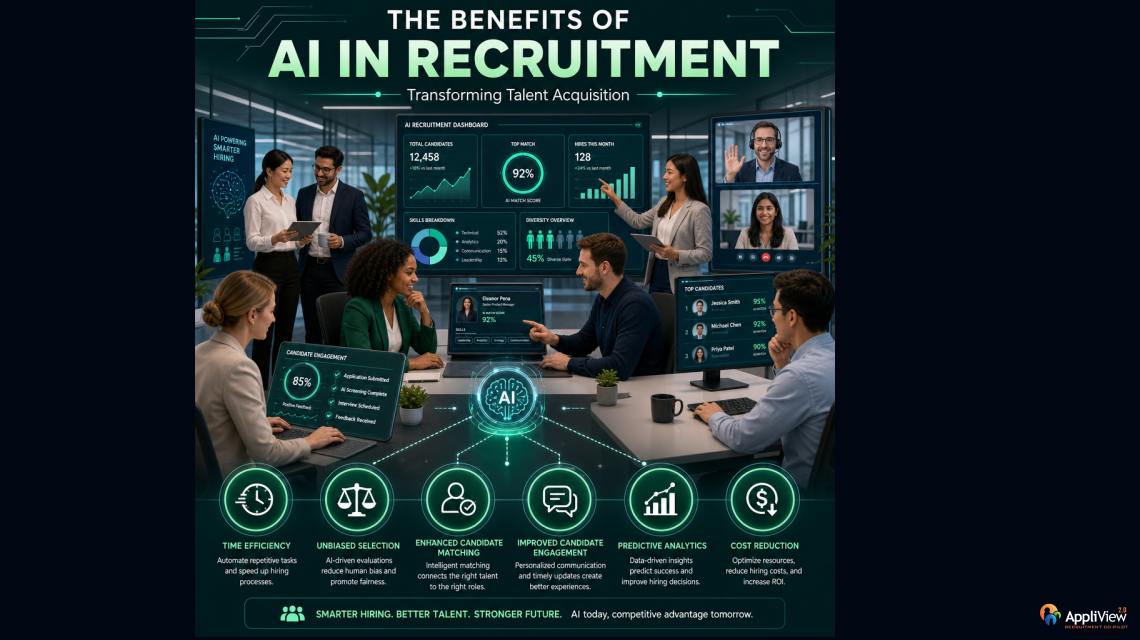
The benefits of AI-driven candidate assessments are extensive, helping organizations improve hiring efficiency, accuracy, and overall recruitment outcomes.
- Speed and Efficiency – AI-powered recruitment tools accelerate resume screening and candidate evaluation, allowing organizations to quickly identify top talent, particularly in high-volume hiring environments.
- Scalability – Advanced AI algorithms can consistently assess large volumes of applications, making it easier for businesses to recruit talent across multiple locations and global markets.
- Consistency and Objectivity – AI candidate assessment tools apply standardized evaluation criteria to every applicant, reducing subjective decision-making and creating a more fair and objective hiring process.
- Enhanced Diversity – Well-designed Artificial Intelligence (AI) systems can help reduce unconscious bias in recruitment, supporting diversity, equity, and inclusion initiatives while promoting a more diverse workforce.
- Improved Matching and Predictive Analytics – By leveraging advanced data analysis and predictive hiring analytics, AI can better evaluate candidate qualifications, predict job success, and improve overall candidate-role matching.
- Elevated Candidate Experience – AI-powered chatbots and automated communication tools enhance candidate engagement by providing timely updates, faster responses, and a smoother recruitment journey.
By incorporating AI in recruitment, organizations can streamline hiring processes, reduce recruitment costs, improve candidate quality, and make more informed, data-driven hiring decisions.
The Disadvantages and Risks of AI in Hiring
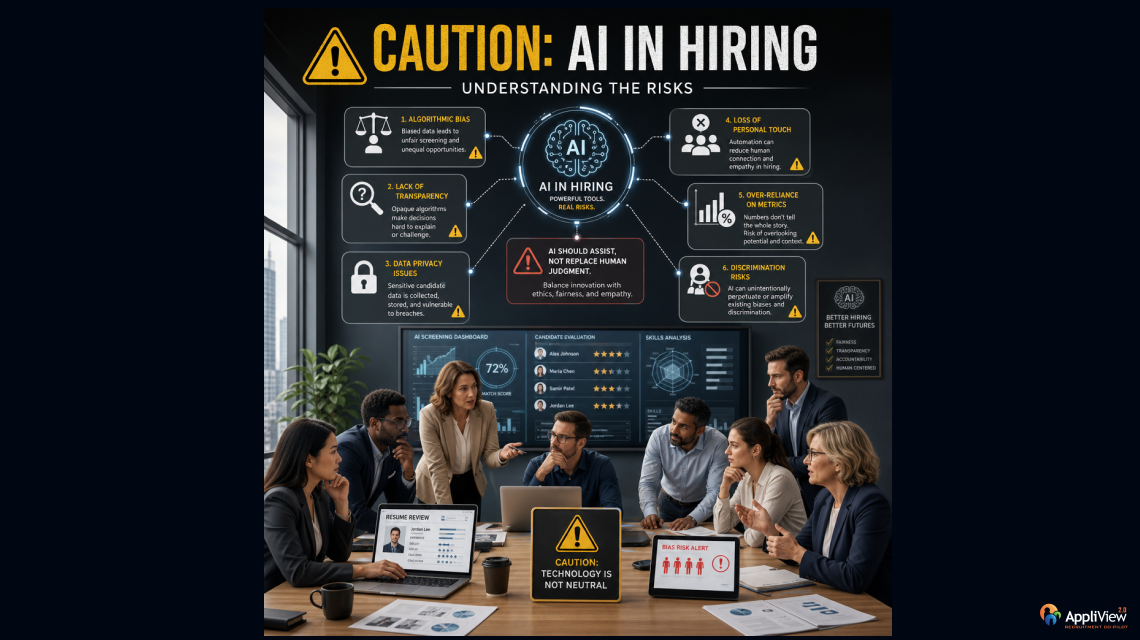
While AI in hiring offers significant benefits, organizations must also be aware of the challenges associated with implementing AI-driven candidate assessments to ensure fair and effective recruitment outcomes.
- Bias Amplification – If AI-powered recruitment systems are trained on biased historical data, they may unintentionally reinforce existing hiring biases and lead to unfair candidate evaluations.
- Opacity and Lack of Transparency – Many AI recruitment tools operate as complex algorithms or “black boxes,” making it difficult for recruiters and candidates to understand how hiring decisions are made.
- Over-Rigidity – Overly strict evaluation criteria within AI candidate assessment tools may eliminate qualified candidates who possess valuable skills and experience but do not perfectly match predefined parameters.
- Difficulty in Assessing Soft Skills – Although AI excels at analyzing structured data, it often struggles to accurately evaluate critical soft skills such as empathy, creativity, communication, leadership potential, and cultural fit.
- Impersonal Candidate Experience – Excessive reliance on automation can create a less personalized recruitment process, potentially making candidates feel disconnected from the organization and reducing overall engagement.
To maximize the benefits of Artificial Intelligence in recruitment, organizations should combine AI-driven insights with human judgment, ensuring transparency, fairness, and a positive candidate experience throughout the hiring process.
Real-World Applications of AI in Recruitment

The value of AI-driven candidate assessments can be seen across a wide range of industries, where organizations use AI-powered recruitment solutions to improve hiring efficiency and candidate experiences.
- High-Volume Recruiting – Retail, logistics, and other high-volume hiring sectors leverage AI in recruitment to rapidly screen applications, rank candidates, and conduct standardized assessments, significantly reducing time-to-hire.
- Professional and Technical Roles – Technology companies and specialized employers use AI candidate assessment tools to manage coding tests, skills evaluations, and technical assessments, helping identify highly qualified candidates with greater accuracy.
- Candidate Engagement – Organizations increasingly utilize AI-powered chatbots and automated communication tools to provide timely updates, answer candidate questions, and improve engagement throughout the recruitment process, leading to higher candidate satisfaction.
While these applications demonstrate the effectiveness of Artificial Intelligence in hiring, organizations should maintain appropriate human oversight to prevent over-reliance on automation, minimize bias, and ensure a fair, transparent, and candidate-centric recruitment process.
The Path Forward Responsible Use of AI Assessments
To maximize the benefits of AI-driven candidate assessments while ensuring fairness and compliance, organizations should follow several best practices for responsible AI adoption in recruitment.
- Define Clear Goals – Before implementing AI-powered recruitment solutions, establish clear objectives and identify the specific hiring challenges AI is expected to address, such as candidate screening, talent sourcing, or reducing time-to-hire.
- Maintain Human Oversight – Artificial Intelligence in recruitment should support and enhance decision-making rather than replace human judgment. Recruiters and hiring managers should remain actively involved in evaluating candidates and making final hiring decisions.
- Conduct Regular Audits – Organizations should continuously monitor AI recruitment tools to identify potential bias, inconsistencies, or disparities in hiring outcomes and ensure the technology operates fairly and effectively.
- Demand Transparency – When selecting AI vendors, seek clear information about algorithms, data sources, model training methods, and bias mitigation practices to promote trust and accountability in the hiring process.
- Protect the Candidate Experience – While automation can improve efficiency, businesses should maintain open communication and a human-centered approach throughout the recruitment journey to ensure candidates feel informed, respected, and engaged.
By following these best practices, organizations can implement AI in hiring responsibly, improve recruitment outcomes, and create a more transparent, inclusive, and effective talent acquisition process.
Conclusion
AI-driven candidate assessments are transforming the hiring landscape by helping organizations streamline recruitment, reduce costs, improve candidate matching, and make more informed hiring decisions. While the benefits of AI-powered recruitment are substantial, businesses must carefully manage risks related to bias, transparency, and candidate experience. The most effective hiring strategies combine advanced AI technology with human expertise, ensuring fair, inclusive, and data-driven recruitment outcomes. Organizations that adopt responsible AI hiring practices will be better positioned to attract top talent, improve workforce diversity, and build stronger teams for long-term success.