Addressing Algorithmic Bias in AI Candidate Evaluation: An Ethical Necessity
June 30, 2026
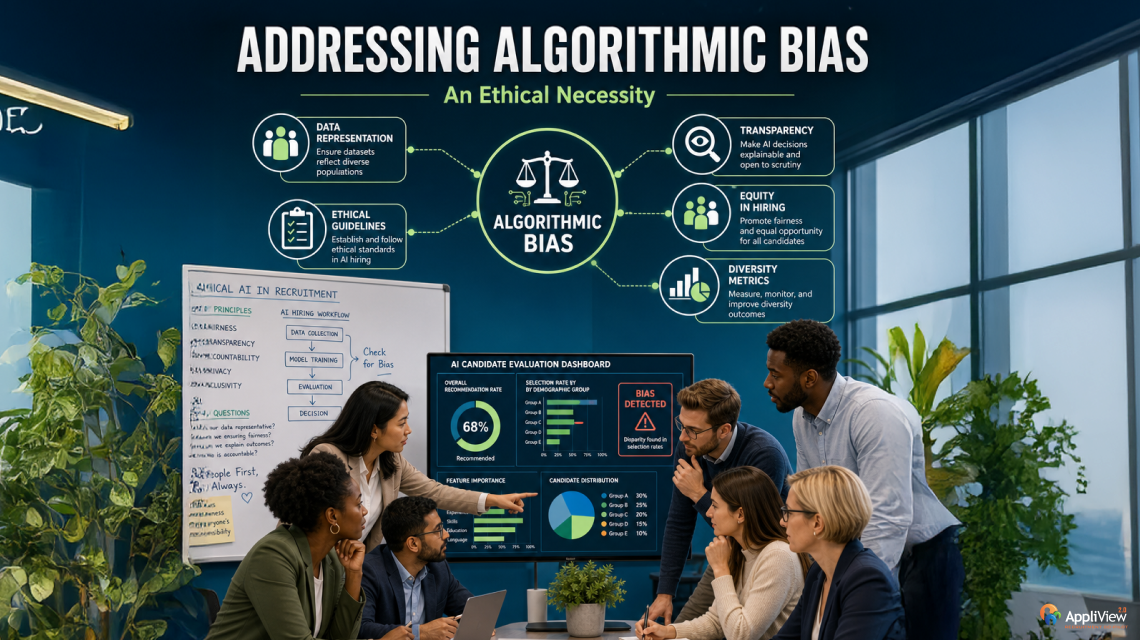
Algorithmic bias in AI candidate evaluation has become a critical concern as organizations increasingly rely on AI for recruitment. Biased algorithms can unintentionally discriminate against qualified candidates, affecting diversity, fairness, and legal compliance. By using responsible AI practices, improving data quality, implementing governance frameworks, and maintaining human oversight, businesses can create ethical and transparent hiring processes. Addressing AI bias not only reduces recruitment risks but also strengthens diversity, improves candidate trust, and enhances long-term hiring outcomes.
Why Algorithmic Bias in Hiring Matters

As organizations increasingly adopt AI in hiring, addressing algorithmic bias in AI candidate evaluation has become essential. AI tools are now used for tasks such as writing job descriptions, screening resumes, and evaluating video interviews, making them a key part of the recruitment process. However, biased AI systems can unfairly exclude qualified candidates based on race, gender, or socioeconomic background, creating barriers to equal employment opportunities. By reducing AI hiring bias and implementing ethical AI practices, organizations can build fair, transparent, and inclusive recruitment processes that improve both hiring quality and candidate trust.
How We Got Here From Human to Machine Bias

The hiring process has always been influenced by human bias, and AI was introduced to make recruitment more objective and efficient. However, when AI systems are trained on historical hiring data, they can unintentionally reproduce existing patterns of discrimination. Algorithmic bias in AI candidate evaluation occurs when AI models generate unfair hiring outcomes that favor or disadvantage certain groups based on factors unrelated to job performance. By identifying and reducing AI hiring bias, organizations can promote fair hiring practices, improve workplace diversity, and build more transparent, ethical, and inclusive recruitment processes.
Where Bias Enters AI Candidate Evaluation

Algorithmic bias in AI candidate evaluation can occur at different stages of the AI recruitment process. Identifying these risks helps organizations build fair, transparent, and inclusive hiring systems. Common sources of bias include:
- Problem Framing: Defining the ideal candidate based only on previous hires can reinforce existing hiring patterns and limit diversity.
- Training Data: AI trained on historical hiring data may inherit and repeat past biases, leading to unfair hiring decisions.
- Feature Selection: Using indirect indicators, such as location or education, can unintentionally introduce demographic bias into candidate evaluations.
- Model Design: Prioritizing prediction accuracy without considering fairness can result in biased hiring outcomes.
- Deployment and Monitoring: Without regular audits and performance monitoring across demographic groups, AI hiring bias can remain undetected over time.
By addressing these areas, organizations can reduce algorithmic bias in AI candidate evaluation, improve hiring fairness, and create more transparent and inclusive recruitment processes.
Real-World Implications of Bias in Hiring Tools

Algorithmic bias in AI candidate evaluation can have serious real-world consequences when AI systems make unfair hiring decisions. In some cases, AI hiring tools may rank qualified candidates lower based on factors such as speech patterns, accents, or socioeconomic background instead of job-related skills. This can result in AI hiring bias, where certain demographic groups are consistently disadvantaged during the recruitment process. By identifying and reducing algorithmic bias, organizations can promote fair hiring practices, strengthen workplace diversity, and build more transparent, ethical, and inclusive recruitment processes.
Actionable Strategies for Organizations

Algorithmic bias in AI candidate evaluation can be reduced by adopting a structured and ethical approach to AI recruitment. Organizations should follow these best practices:
- Use Job-Relevant Data: Train AI models using factors directly related to job performance and avoid demographic proxies that may introduce bias.
- Strengthen Governance and Accountability: Maintain transparent records of AI decisions, regularly audit hiring outcomes, and monitor systems to ensure fairness.
- Combine AI with Human Oversight: Use AI to support candidate screening while ensuring final hiring decisions are reviewed by human recruiters.
- Educate and Empower Candidates: Inform job seekers about how AI in hiring is used and ensure they understand their rights throughout the recruitment process.
By following these best practices, organizations can minimize algorithmic bias in AI candidate evaluation, build trust in AI recruitment, and create fair, transparent, and inclusive hiring processes.
Conclusion
Addressing algorithmic bias in AI candidate evaluation is essential for building fair, inclusive, and responsible hiring practices. Organizations that combine ethical AI, transparent governance, quality data, and human decision-making can minimize bias while improving recruitment accuracy and diversity. By adopting responsible AI recruitment strategies, businesses can create equitable hiring experiences, strengthen employer trust, and ensure long-term compliance in an AI-driven recruitment landscape.
