AI-Powered Recruitment Solutions: Transforming Hiring in Modern Organizations
June 24, 2026

As hiring becomes increasingly competitive, organizations are turning to
AI-powered recruitment solutions to streamline talent acquisition and improve hiring outcomes. Modern AI recruiting tools automate tasks such as resume screening, interview scheduling, candidate engagement, and talent sourcing while providing valuable insights into recruitment performance. From talent intelligence platforms and conversational AI to automated screening and workflow orchestration, these technologies help organizations reduce hiring time, improve candidate quality, and enhance recruiter productivity. By carefully selecting tools that align with business objectives and integrating them with existing systems, organizations can build more efficient, scalable, and data-driven recruitment processes.
Why AI in Recruitment Matters Now

In today’s competitive hiring environment, organizations must respond quickly to changing workforce demands and increasing recruitment challenges. With top candidates often leaving the job market within just 10–14 days, hiring teams face growing pressure to attract and secure qualified talent faster than ever before. At the same time, recruiters are expected to manage higher workloads with limited resources while delivering a seamless, mobile-friendly, and personalized candidate experience. These challenges have made AI-powered recruitment solutions an essential part of modern hiring strategies. By leveraging AI recruitment tools, organizations can automate time-consuming tasks such as resume screening and interview scheduling, allowing recruiters to focus on building relationships with top candidates. Advanced AI recruiting software also improves candidate matching by evaluating skills, experience, and potential rather than relying solely on keyword-based searches. In addition, AI-driven chatbots and automated communication tools enhance candidate engagement, ensuring applicants receive timely updates throughout the recruitment process. These intelligent systems also provide valuable recruitment analytics, helping organizations identify hiring bottlenecks, reduce bias, and make more informed decisions. As the adoption of Artificial Intelligence in recruitment continues to grow, the question is no longer whether businesses should invest in AI but which AI hiring solutions best align with their recruitment goals, organizational requirements, and budget. Choosing the right technology can significantly improve talent acquisition, reduce time-to-hire, and create a more efficient and effective recruitment process.
Evolution of Recruitment Technologies

The recruitment technology landscape has undergone significant transformation, evolving from basic digital tools to advanced AI-powered recruitment solutions that streamline and optimize the entire hiring process.
- Job Boards & Applicant Tracking Systems (ATS) – The earliest stage of recruitment technology focused on digitizing job applications and resumes. Applicant Tracking Systems (ATS) helped recruiters organize candidate information, manage applications efficiently, and simplify hiring workflows.
- Programmatic Advertising & Basic Automation – As hiring demands increased, organizations adopted recruitment automation tools and programmatic advertising platforms to optimize job postings, expand candidate reach, and automate routine communication with applicants.
- Modern AI Recruiting (2016–2023) – The rise of AI recruitment tools and talent intelligence platforms transformed hiring by enabling skills-based candidate matching, predictive career path analysis, and data-driven talent acquisition. Solutions such as Eightfold AI and Paradox (Olivia) introduced advanced capabilities for sourcing, screening, and engaging candidates at scale.
- Future Outlook (2024–2026) – Advancements in Artificial Intelligence (AI), Machine Learning (ML), and Natural Language Processing (NLP) are driving the next generation of AI-powered recruitment solutions. These technologies will enable deeper automation, improved candidate sourcing, enhanced decision-making, and seamless integration across recruitment systems.
As recruitment technology continues to evolve, organizations that embrace innovation and stay informed about emerging hiring technologies will be better equipped to improve talent acquisition, increase hiring efficiency, and secure top talent in a competitive market.
Core Segments of AI-Powered Recruitment Tools
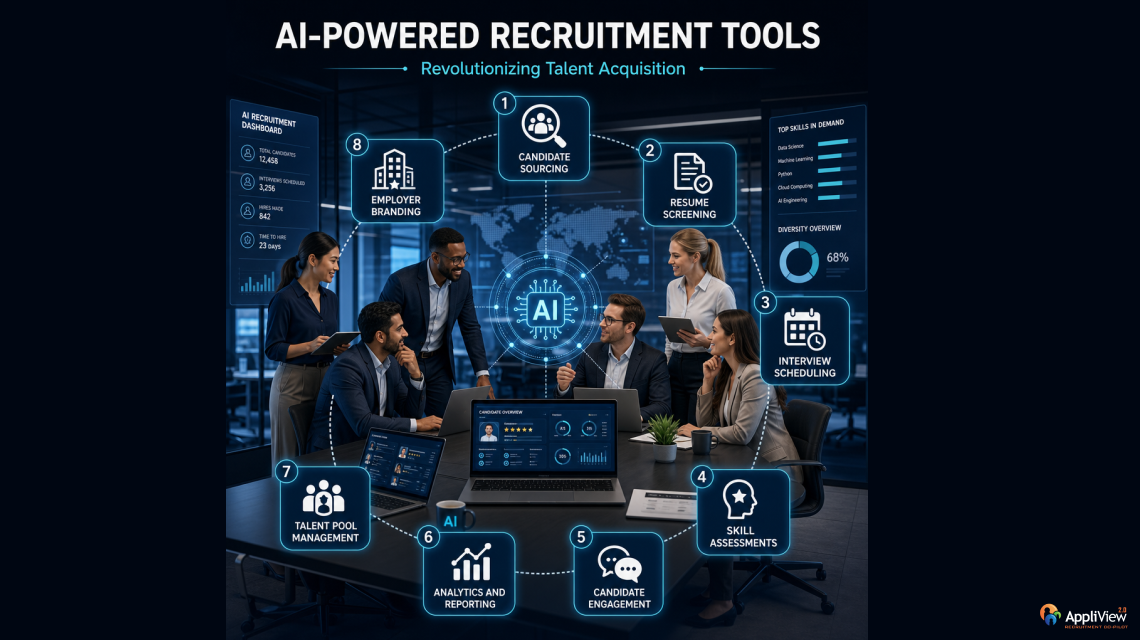
Understanding the core functionalities of AI recruitment tools is essential for organizations looking to optimize their hiring strategies and improve recruitment outcomes. Modern AI-powered recruitment solutions encompass a wide range of technologies designed to streamline different stages of the hiring process. Talent sourcing and prospecting tools such as PeopleGPT and SeekOut help recruiters identify and engage qualified candidates, including passive talent who may not be actively searching for new opportunities. Candidate screening, matching, and shortlisting platforms like Truffle and Skima AI use advanced algorithms to evaluate applications more efficiently, reducing manual effort and improving candidate selection accuracy. For organizations conducting large-scale hiring, conversational AI solutions such as Paradox (Olivia) enhance candidate engagement through intelligent chat-based interactions that guide applicants throughout the recruitment journey. In addition, AI-powered video interview and assessment platforms like HireVue help standardize candidate evaluations by analyzing video responses and providing deeper hiring insights. Organizations seeking to improve diversity and inclusion can leverage inclusive job content tools such as Textio, which optimize job descriptions to attract a broader and more diverse talent pool. Meanwhile, talent intelligence platforms like Eightfold AI support advanced skills mapping, workforce planning, and long-term talent management strategies. To further improve efficiency, workflow automation and orchestration tools such as Zapier integrate various recruitment systems and automate repetitive tasks across the hiring lifecycle. By leveraging these specialized AI recruiting solutions, organizations can overcome key recruitment challenges, improve hiring efficiency, reduce bias, and create a more effective and data-driven talent acquisition process.
Choosing the Right AI Recruitment Tools

Selecting the right AI-powered recruitment tools requires a strategic approach to ensure they align with your hiring objectives, existing workflows, and long-term talent acquisition goals.
- Identify Core Recruitment Challenges – Before investing in AI recruitment solutions, assess the specific bottlenecks within your hiring process. Whether your challenges involve candidate sourcing, resume screening, candidate engagement, or reducing time-to-hire, identifying these pain points will help you select the most effective tools.
- Start with High-Impact Use Cases – Rather than implementing multiple solutions at once, begin by testing one or two AI recruiting tools in areas that can deliver immediate value. For example, combining a talent sourcing platform with an Applicant Tracking System (ATS) can help organizations evaluate effectiveness before scaling adoption.
- Prioritize Transparency and Ethical AI – When evaluating vendors, ensure they provide clear information about their AI algorithms, model training processes, and methods for addressing data bias. Transparency is essential for building trust and ensuring fair, compliant, and responsible hiring decisions.
- Ensure Seamless Integration – Choose AI hiring solutions that integrate smoothly with your existing HR systems, ATS platforms, and recruitment workflows. Strong integration capabilities help streamline operations, improve data consistency, and maximize the return on your technology investment.
By following these best practices, organizations can successfully implement AI-powered recruitment solutions, improve hiring efficiency, and create a more effective and data-driven recruitment process
Future-Proof Your Talent Acquisition Strategy

AI-powered recruitment solutions are no longer just an industry trend; they have become essential for organizations seeking to improve hiring efficiency, enhance candidate experiences, and build a more effective talent acquisition strategy. By understanding the capabilities of modern AI recruitment tools and implementing them strategically, businesses can streamline hiring workflows, reduce manual effort, improve candidate matching, and make more informed recruitment decisions. As the recruitment landscape continues to evolve, organizations that embrace Artificial Intelligence in recruitment will be better positioned to attract, engage, and retain top talent in a competitive market.
Ready to transform your hiring process with AI-powered recruitment solutions? Our team of experts can help you identify, implement, and optimize the right AI hiring solutions for your organization. Contact us today to learn how we can streamline your recruitment strategy, improve hiring outcomes, and support your long-term talent acquisition goals.
Conclusion
AI-powered recruitment solutions have evolved from optional enhancements to essential components of modern hiring strategies. By leveraging artificial intelligence, automation, and talent intelligence technologies, organizations can accelerate recruitment cycles, improve candidate experiences, and make more informed hiring decisions. Success depends on selecting the right tools, ensuring seamless integration, maintaining transparency, and adopting a phased implementation approach that delivers measurable business value. As recruitment technology continues to advance, organizations that embrace AI-driven hiring will be better positioned to attract, engage, and retain top talent.